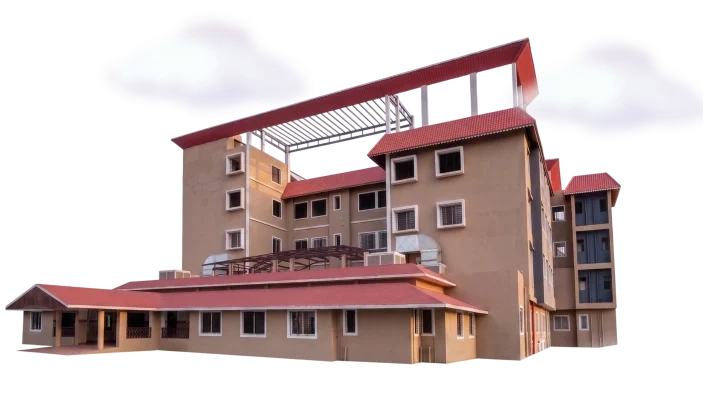

Rehabilitation Center in Nagpur: What Happens From Admission to Discharge

The decision is made. Your family has agreed that home care is no longer enough, and you have started looking for a rehabilitation center in Nagpur. Now a different set of questions keeps you awake. Will he be alone on the first night? What will she do all day? Can we visit? When does he come home?
No brochure answers these well, so this guide does. It walks you through a residential stay week by week, using the way we work at Sanmarg Mind Wellness and Rehabilitation Centre, off Wardha Road. If you are still comparing centres, read our guide on how to choose a rehabilitation centre in Nagpur first and come back here.
In short: most residential stays last 30 to 90 days and move through four stages. The first week is assessment and stabilisation. Weeks 2 to 4 are intensive therapy. From week 5 the focus shifts to rebuilding everyday life. The last stage is discharge with a follow-up plan. Your psychiatrist sets the pace, so treat these timelines as a guide, not a fixed schedule.
Before admission day: the first call and the assessment
Everything starts with a phone call. You describe what is happening at home, and the team books a consultation with a psychiatrist. That assessment decides the most important thing: whether your family member needs to stay at the centre at all, or whether regular outpatient visits will do.
Admission is usually advised when withdrawal could be medically risky, when the person may harm themselves or others, when outpatient treatment has already failed, or when triggers at home make recovery impossible.
Under India’s Mental Healthcare Act, 2017, an adult can ask to be admitted on their own. When a person is too unwell to make that decision, the Act allows admission with the support of a nominated representative, based on a psychiatrist’s assessment. If your family member is refusing help altogether, our guide on supporting a loved one who won’t admit they need help explains how to start that conversation.
What to carry: comfortable clothes for a few weeks, basic toiletries, current medicines with their prescriptions, old medical reports and discharge papers, and a photo ID for the patient and one family member. The admission team will give you the exact list and tell you what is not allowed on campus.
For information on assessment and admission at Sanmarg Mind Wellness and Rehabilitation Centre, call +91 9028078791. Admission support is available 24/7.
Days 1 to 7: assessment, detox and settling in
The first week is about safety, not speeches. A detailed evaluation of mind and body comes before any treatment plan is drawn up. An on-site physician checks general health, because the mind does not heal well in a body that is unwell.
For someone dependent on alcohol or drugs, this week includes medically supervised detox. Alcohol detox usually takes 5 to 10 days, with medication and monitoring to keep withdrawal safe. Why stopping suddenly without medical supervision can be risky is explained in our guide to alcohol withdrawal symptoms and safe detox in Nagpur.
For someone admitted with a psychiatric condition such as severe depression, bipolar disorder or schizophrenia, the first week is used to stabilise sleep, appetite and symptoms, and to start or adjust medication under close watch. Nursing staff are present 24×7 throughout.
This is also when the person settles into their room. Sanmarg offers dormitory, semi-special, special and luxury rooms, and a female wing staffed entirely by women. You can see them on our residential rehabilitation centre page.
What families should expect: the first week is the hardest. Your family member may be angry, tearful, or ask to come home every time you speak. This is common in the first days and usually eases as the person settles. Share what you hear with the treating team.
Weeks 2 to 4: therapy begins in earnest
Once the body is stable, the real work starts. At Sanmarg this follows the bio-psycho-social approach: the body, the mind and the person’s relationships are treated together, every day.
- Individual sessions with a psychologist, using evidence-based therapies such as CBT, REBT, DBT and mindfulness.
- Psychiatrist reviews, where medication is monitored and adjusted as the person improves.
- Group sessions, where patients hear others describe the same struggle. For many, this is the first time they stop feeling alone.
- Family counselling, which begins in this phase and continues until discharge.
If you are unsure who does what, our explainer on psychiatrist vs psychologist vs counsellor covers each role.
Addiction often occurs alongside depression or anxiety. The assessment checks for both, so the treatment plan can address them together. Our depression and mood disorder treatment page explains how that care works.
A typical day inside a rehabilitation center in Nagpur
Families often imagine long, empty hours. The opposite is true. A day at Sanmarg has a rhythm, and that rhythm is part of the treatment.
| Time | What happens |
|---|---|
| Morning | Sunrise yoga and meditation |
| Forenoon | Therapy sessions and doctor rounds |
| Midday | A homestyle meal, eaten together |
| Afternoon | Creative therapy, gardening or a group session |
| Evening | A walk, games and quiet time |
| Night | Rest, with 24×7 nursing care on duty |
A fixed routine does something medicine cannot. It gives back the structure that addiction and mental illness take away: regular sleep, regular meals, and a reason to get up.
Families can visit the Sanmarg campus off Wardha Road before admission and speak with the treating team. To arrange a visit, call +91 9028078792 or write to contact@sanmargmindcare.com.
Weeks 5 to 8 and beyond: rebuilding everyday life
By now most patients look and sound more like themselves. This is exactly when families ask, “Can he come home now?” Feeling better is an encouraging sign, but it is not the same as being ready, so discuss the timing with the psychiatrist before deciding.
This phase prepares the person for life outside:
- Social skills training to rebuild everyday conversation and connection.
- Creative therapies such as music, dance, drama, art and storytelling, because some feelings come out more easily as a song than a sentence.
- Gardening, gym and games, which rebuild stamina and patience.
- Movie nights and celebrations, which let patients practise normal life in a safe place.
How long this phase lasts depends on the person. Addiction programmes typically run 30 to 90 days in total. Some psychiatric conditions need longer residential care. Your psychiatrist will advise after reviewing progress, and the plan is adjusted as the person grows.

What families do during the stay
Recovery is not something that happens only to the patient. What the family learns during these weeks helps them support the person after discharge.
- Attend family counselling. It is part of every treatment programme at Sanmarg. You learn how to support without controlling, and how to stop covering up for the addiction.
- Visit as the team advises. Family visits are encouraged as part of treatment. Ask the admission team about visiting days and phone calls.
- Prepare the home. Remove alcohol and other triggers, plan a daily routine, and decide who will supervise medicines.
- Look after yourself. Months of worry take a toll. Use this time to rest and to get your own questions answered.
Discharge day and the first 90 days at home
Discharge is planned, not sudden. Before your family member leaves, the team prepares a follow-up plan: medicines, outpatient review dates, counselling sessions and the warning signs to watch for.
The first few months at home are a vulnerable period. Old friends, old routes and old stress all return at once. Keep every follow-up appointment, even when things seem fine. Learn the early warning signs from our guide on why relapse happens after rehab. A slip does not mean treatment failed. It means the plan needs review, so contact the treating team early.
How much does a stay cost?
There is no single price. Cost depends on the room type, the length of stay and whether medical detox is needed. At Sanmarg the estimate is explained to the family after the first assessment. For a fuller breakdown, see our guide to alcohol rehabilitation cost in Nagpur.
Frequently asked questions
Can a patient leave a rehabilitation center before the programme ends?
An adult who was admitted at their own request can ask for discharge. The treating psychiatrist will explain the risks of leaving early and suggest a safer plan. It is advisable for the patient, the family and the doctor to decide the discharge date together.
Is 30 days in rehab enough?
For some people, yes. For many, 30 days covers detox and the start of therapy but not the habits that keep recovery going. Your psychiatrist will recommend a duration after the first few weeks, based on progress and not on a fixed package.
Is a rehabilitation center only for addiction?
No. Sanmarg treats addiction and psychiatric conditions under one roof, including depression, bipolar disorder, schizophrenia, anxiety disorders and dementia. You can see the full list on our de-addiction centre in Nagpur services page.
Is it safe for women to be admitted?
Sanmarg has a dedicated female wing where the psychiatrists, therapists, counsellors, nurses and attendants are all women. Ask the admission team about availability.
Will anyone at work or college find out?
No. Diagnosis and treatment details are confidential and are shared only with the people the patient or family chooses.
What if my family member refuses to come?
Start with a family consultation. The team can guide you on how to talk to them and what your options are. A family consultation does not commit you to admission.
The psychiatrists at Sanmarg
Treatment at Sanmarg is led by its five co-founding doctors. You can read more about our team of psychiatrists in Nagpur.
| Doctor | Qualifications | Registration No. |
|---|---|---|
| Dr. Nikhil Pande | M.B.B.S., DPM, M.D. (Psychiatry) | 2003/02/0354 |
| Dr. Shrikant Nimbhorkar | M.B.B.S., DPM, M.D. (Psychiatry) | 2003/02/0334 |
| Dr. Suleman Virani | M.B.B.S., DPM | 2003020599 |
| Dr. Sagar Chiddarwar | M.B.B.S., M.D. (Psychiatry) | |
| Dr. Abha Bang Soni | M.B.B.S., DPM, M.D. (Psychiatry) | 2009083101 |
Location: a rehabilitation center on Wardha Road, Nagpur
The campus is at 12, 13, Mauza Sukali, Panjari Lodhi, off Wardha Road, Nagpur, Maharashtra 441108. Families looking for a rehab centre near Manish Nagar or Besa reach it by Wardha Road, and people also come from Hingna, Dharampeth, Sitabuldi and Kamptee. For a psychiatric rehabilitation centre in Nagpur, Maharashtra, the setting is quiet and away from the city centre, yet close enough for regular family visits. Get directions on Google Maps.
Take the first step today
You do not need to have every answer before you call. If someone you love needs more help than home can give, you can speak to the team at Sanmarg Mind Wellness and Rehabilitation Centre, a rehabilitation centre in Nagpur with a team of psychiatrists, 24×7 nursing care and a 4-acre campus off Wardha Road.
Contact Sanmarg Mind Wellness and Rehabilitation Centre: +91 9028078791 | +91 9028078792 | +91 9112233955. You can also book an appointment online.
Address: 12, 13, Mauza Sukali, Panjari Lodhi, off Wardha Road, Nagpur, Maharashtra 441108
Email: contact@sanmargmindcare.com
Medically reviewed by: Dr [name], [qualification], [State Medical Council] Registration No. [number]
AI disclosure: This article was drafted with AI assistance and reviewed by the doctor named above.
This article is general health education for families. It is not medical advice and does not promise any treatment result. Treatment decisions are made only after an in-person assessment by a registered medical practitioner. In an emergency, go to the nearest hospital.