

Nasha Mukti Kendra in Nagpur: A Compassionate Path Back to a Sober Life
If you’re reading this at 2 a.m. because you can’t sleep, worrying about someone you love – you’re not alone, and you’re not out of options. Every year, thousands of families across Nagpur go through this exact moment: watching addiction slowly take over a person they care about and not knowing where to turn for help that’s actually reliable. Whether you’ve typed “Nasha Mukti Kendra in Nagpur,” searched for a “Nasha Mukti Kendra near me,” or looked it up as नशा मुक्ति केंद्र नागपुर, this article will walk you through what real, effective de-addiction treatment looks like, what questions to ask before choosing a center, and how Sanmarg Mind Care approaches recovery – for the patient and for the family standing behind them.
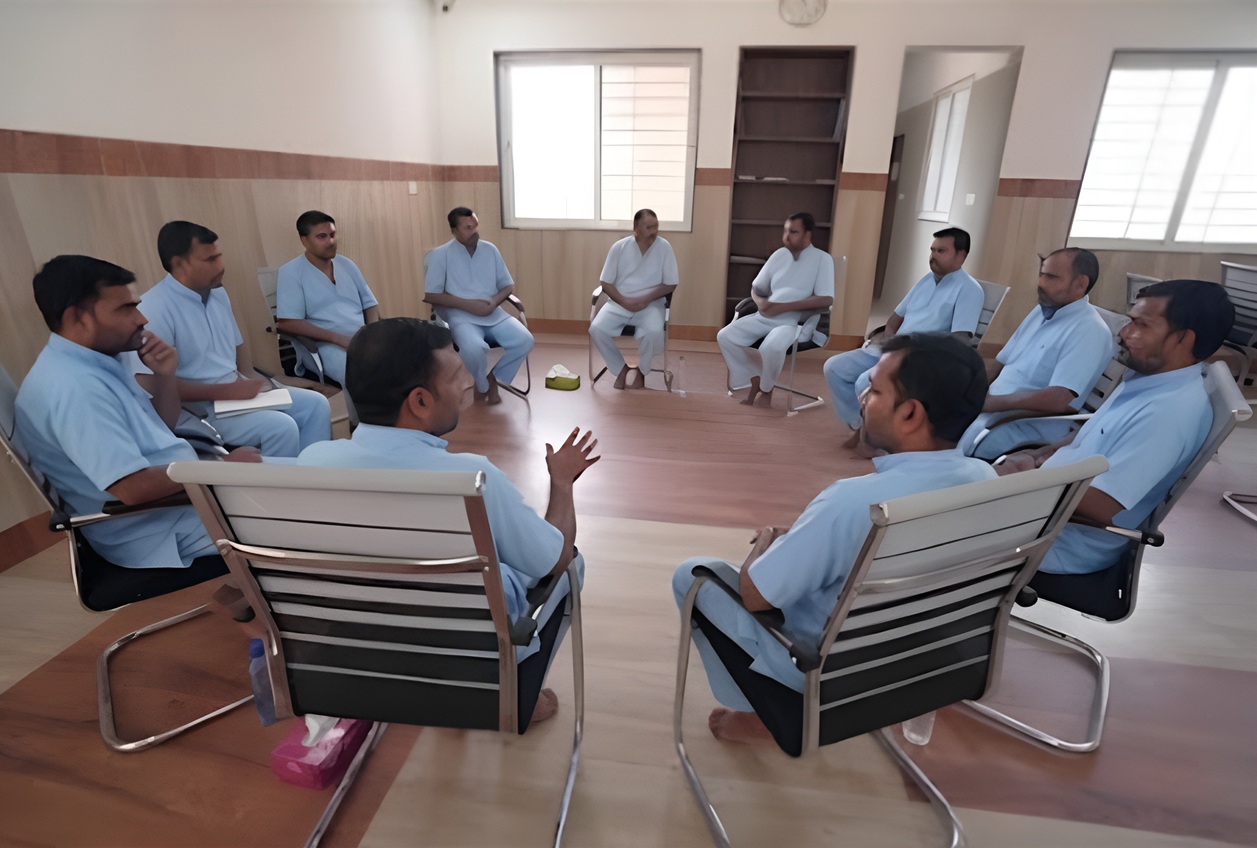
Why More Nagpur Families Are Searching for De-Addiction Help
Nagpur has grown fast over the last decade – more colleges, more industry, more late-night work culture, and unfortunately, easier access to alcohol and drugs than a generation ago. Counsellors across the city report a steady rise in cases involving alcohol dependence, tobacco and gutka addiction, and increasingly, prescription drug misuse among young adults. What hasn’t kept pace is public understanding of addiction as a medical condition rather than a personal failure – which is exactly why so many families delay seeking help until a crisis forces their hand.
The truth is simple: addiction is a disease of the brain, not a lack of willpower. Treating it requires the same structured, medical approach you’d expect for any chronic illness – not shame, and not guesswork.
What Actually Makes a Nasha Mukti Kendra in Nagpur Effective?
Not every rehabilitation center offers the same standard of care. Before you commit to any de-addiction center in Nagpur, it helps to understand the components that separate a genuinely effective program from one that’s just a bed and a brochure.
1. Medical Detoxification, Not Just “Cold Turkey”
Withdrawal from alcohol, opioids, or benzodiazepines can be medically dangerous – in severe cases, even life-threatening. A proper de-addiction center manages this phase under the supervision of a psychiatrist and nursing staff, using medication to ease withdrawal symptoms safely, rather than simply locking a patient in a room and waiting it out.
2. Psychological Counselling and Therapy
Detox clears the body; therapy addresses the mind. Most reputable centers, including well-known names like Cadabam’s, build their programs around Cognitive Behavioural Therapy (CBT), Motivational Interviewing, and relapse-prevention counselling – helping the patient understand their triggers and build real coping skills, not just abstain for the duration of a stay.
3. Family Involvement, Not Family Exclusion
Addiction rarely affects just one person – it reshapes an entire household’s routines, trust, and emotional safety. The centers that get lasting results are the ones that actively involve family members through counseling sessions, helping rebuild communication and setting the family up to support recovery once the patient comes home.
4. A Real Aftercare Plan
The weeks immediately after discharge are when relapse risk is highest. Look for a center that offers structured aftercare – follow-up counselling, support groups, or alumni check-ins – rather than one that considers treatment “done” the day a patient walks out the door.
5. Dual-Diagnosis Awareness
Addiction very often travels with depression, anxiety, or trauma. A center that only treats the substance use and ignores the underlying mental health condition is treating half the problem. Ask directly whether the center screens for and treats co-occurring mental health conditions.
How Sanmarg Mind Care Approaches De-Addiction in Nagpur
At Sanmarg Mind Care, recovery isn’t treated as a one-size-fits-all program – it’s built around the individual sitting in front of us. Our approach rests on a few core principles:
- Medically supervised detox conducted under psychiatric care, so withdrawal is managed safely and as comfortably as possible.
- One-on-one counselling to understand the personal history, stress, or trauma that often sits underneath substance use.
- Group therapy sessions where patients recovering together build accountability and reduce the isolation that addiction thrives on.
- Structured family counselling, because we’ve seen firsthand that recovery holds up far better when the people at home understand what their loved one is going through and how to support it without enabling it.
- A realistic aftercare plan, so the transition home isn’t the point where progress unravels.
We treat alcohol dependence, drug addiction, tobacco and gutka addiction, and behavioural addictions such as gambling, alongside co-occurring conditions like anxiety, depression, and stress-related disorders – because addiction and mental health are rarely separate problems.
What the Recovery Journey Actually Looks Like
Every patient’s timeline is different, but a typical structured program at a Nasha Mukti Kendra generally moves through these stages:
- Assessment – a detailed medical and psychological evaluation to understand the substance history, physical health, and any co-occurring conditions.
- Detoxification – medically supervised withdrawal management, usually the first 5-10 days.
- Rehabilitation – individual therapy, group sessions, and psychoeducation, typically running several weeks depending on severity.
- Family therapy – sessions that prepare both the patient and the household for life after discharge.
- Aftercare – ongoing check-ins, support groups, and relapse-prevention planning.
Recovery isn’t linear, and it isn’t a single event – it’s a process. Centers that promise an overnight “cure” or a guaranteed 100% success rate should be treated with caution; ethical treatment providers will always be honest that recovery takes sustained effort, not a miracle fix.
How to Choose the Right De-Addiction Center in Nagpur: A Family’s Checklist
If you’re comparing options, ask each center these questions before you decide:
- Is detox medically supervised by a qualified psychiatrist or physician?
- What specific therapies are used – CBT, group therapy, family counselling?
- Is there a clear, written treatment plan, or is it vague?
- What does aftercare look like once the patient is discharged?
- Are the costs transparent, with no hidden charges?
- Can you speak to the treating team directly before admission?
- Is the environment respectful and dignified, or does it feel more like a holding facility?
A good center will answer every one of these clearly and without hesitation. If you’re getting vague answers or high-pressure sales tactics instead, that’s worth noticing.
Learn more about our services →
What Does Treatment Cost at a Nasha Mukti Kendra in Nagpur?
This is one of the questions families ask most and one that far too many centers dodge. Costs genuinely vary based on the substance involved, the severity of dependence, whether inpatient admission is needed, room type (general ward, semi-private, or private), and how long treatment runs. As a broad guide, basic inpatient de-addiction programs in Nagpur can range anywhere from a few thousand rupees for short outpatient counselling to a more significant monthly cost for full residential care with medical detox and therapy included.
Rather than quoting a number that won’t apply to your specific situation, the honest answer is this: a proper assessment call will give you a realistic figure based on the actual case, not a generic starting price used to get you through the door. If a center refuses to discuss cost transparently before admission, treat that as a warning sign, not a technicality.
Nasha Mukti Kendra or Vyasan Mukti Kendra – Is There a Difference?
In and around Nagpur, you’ll often see both terms used for the same thing. “Nasha Mukti Kendra” is the more common Hindi-origin term used across India, while “Vyasan Mukti Kendra” is the Marathi equivalent used widely in Maharashtra, including Nagpur. Both refer to the same kind of facility – a de-addiction and rehabilitation center – so if you’ve been searching using either term, you’re looking for the same type of help.
A Word for the Families Reading This
If you’re a parent, spouse, sibling, or friend trying to help someone through addiction, you are carrying a heavy, often invisible weight. You may feel exhausted, afraid, or even guilty – wondering if you could have done something differently. Please hear this clearly: addiction is not something you caused, and it’s not something you can fix through willpower alone, yours or theirs.
What you can do is take the next right step – reaching out to a qualified center, starting a conversation, or simply calling for guidance before things escalate further. Asking for help is not giving up; it’s often the single most important thing that changes the outcome.
Frequently Asked Questions
Q1. What is a Nasha Mukti Kendra?
A Nasha Mukti Kendra (de-addiction center) is a specialised treatment facility that helps individuals overcome dependence on alcohol, drugs, or other addictive substances through medical detox, therapy, and structured rehabilitation.
Q2. How long does treatment usually take?
It varies by individual and substance history – anywhere from a few weeks for milder cases to a few months for more severe or long-term dependence. Your treating psychiatrist will recommend a duration based on assessment, not a fixed number.
Q3. Is family involvement really necessary during treatment?
Yes. Studies and clinical experience consistently show that recovery outcomes improve when family members are involved through counselling – it rebuilds trust and prepares the home environment for the patient’s return.
Q4. Can addiction treatment be done without hospital admission?
In milder cases, outpatient treatment with regular counselling can work. However, moderate-to-severe dependence, especially involving alcohol or opioids, usually requires supervised inpatient detox for safety.
Q5. Is treatment at Sanmarg Mind Care confidential?
Yes. Every patient’s treatment, records, and personal information are kept strictly confidential, in line with standard medical ethics and privacy practices.
Q6. What should I bring when admitting a family member?
Most centers, including ours, will provide a specific checklist of documents and personal items during the admission call – it’s best to confirm this directly before arrival.
Q7. How do I find a good Nasha Mukti Kendra near me in Nagpur?
Start by checking whether the center has qualified psychiatrists on staff, offers medically supervised detox, and is transparent about its treatment plan and costs. Reading genuine patient/family reviews and speaking to the treating team directly before admission is more reliable than going purely by search ranking or advertising.
Q8. Is Nasha Mukti Kendra the same as Vyasan Mukti Kendra?
Yes – “Nasha Mukti Kendra” and “Vyasan Mukti Kendra” both refer to de-addiction and rehabilitation centers. The terms are used interchangeably across Maharashtra, including Nagpur.
Take the First Step Today
If someone you love is struggling with addiction, you don’t have to figure this out alone. Sanmarg Mind Care’s team in Nagpur is here to answer your questions honestly, walk you through the treatment process, and help you take the next step – whenever you’re ready.
Call us today for a confidential consultation or visit sanmargmindcare.com to learn more about our de-addiction and mental health programs in Nagpur.
📍 12, 13, Mauza Sukali, Panjari Lodhi, off Wardha Road, Nagpur, Maharashtra 441108.
📞 +91 9028078791 | +91 9028078792 | +91 9112233955
📧 contact@sanmargmindcare.com
🌐 sanmargmindcare.com

2 Comments
How to Choose a Nasha Mukti Kendra in Nagpur | Sanmarg Rehab
September 08, 2026, at 6:50 am[…] terms can be used differently across India, but in everyday usage, Nasha Mukti Kendra, de-addiction centre, rehabilitation centre and addiction treatment centre may all refer to […]
Alcohol Withdrawal Symptoms: When Is Detox Dangerous in Nagpur?
October 07, 2026, at 10:03 am[…] can explore Sanmarg’s addiction and rehabilitation services or its detailed Nasha Mukti Kendra in Nagpur guide before making a treatment […]